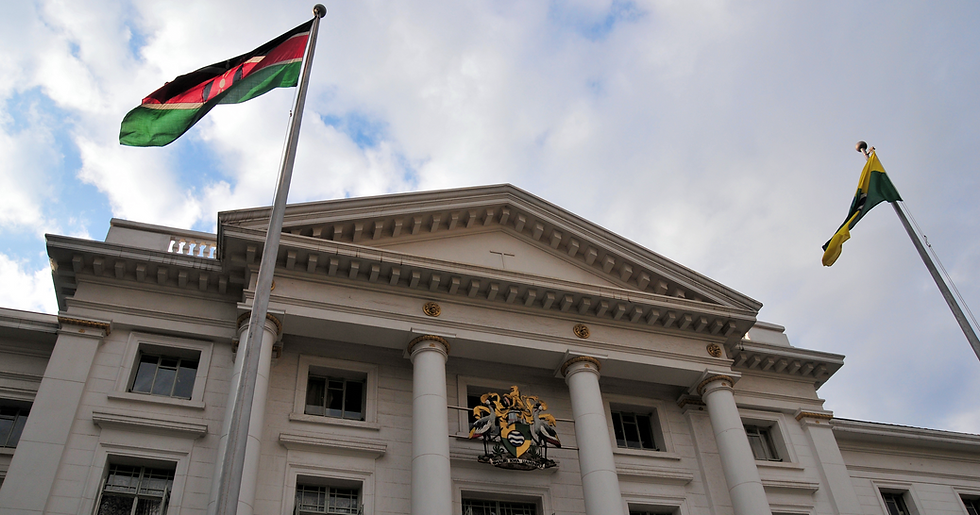
Kenya’s Journey Towards Gender Equality in Politics: Lessons for the Continent
- Futurelect

- Sep 11, 2025
- 3 min read
Kenya has made significant strides since the dawn of a new constitution. Fifteen years ago, women were less prominent in politics, but the road to equality remains a challenge. “Kenya has achieved remarkable progress,” states Natasha Kimani, Regional Director at Futurelect. Currently, we have seven female governors, 29 members of parliament, and 201 women elected at the national and county levels. This accounts for 10.6% of all elected officials, a rise from 9.1% in 2017.” These milestones are indeed promising. An independent woman was elected governor in Meru County for the first time. However, the broader context reveals a different reality. “Only 11% of the candidates printed by the electoral commission were women,” Kimani notes. “The political landscape is still predominantly male, with just one party led by a woman. Political parties are key gatekeepers, and their commitment to inclusivity is essential.”

These challenges go beyond the numbers, as women still experience violence, harassment, and discrimination during their campaigns. The 2022 elections witnessed increased online and offline attacks against female candidates. “Women’s public leadership in Africa faces significant hurdles,” Kimani explains. “Historical injustices, patriarchy, and damaging cultural stereotypes contribute to backlash that ranges from exclusion to outright violence, discouraging many women from vying for office.” Even the constitutional assurances are yet to be fully put into practice. Kenya’s two-thirds gender rule has not been met, with Parliament and the Executive falling short of the target. “Kenya boasts one of the finest constitutions globally,” emphasises Kimani. “However, a constitution's effectiveness lies in its execution. Achieving equality transcends being merely a women’s issue. It encompasses justice and human rights for all.”
This challenge isn’t isolated to Kenya; with more than 15 African nations gearing up for elections in 2026, many countries face a similar issue. Women constitute half of the population, yet only 26% of parliament members in Sub-Saharan Africa are female. If this trend continues, gender equality in representation won't happen until 2100. Some nations have made significant advancements; Liberia, Malawi, and Namibia have elected women presidents. Nevertheless, the obstacles are still deeply rooted. Elections can be costly, party systems often lack inclusivity, and media portrayals frequently reduce women to their roles as family members or their looks. “Electoral violence, particularly sexual violence, is intentionally used to exclude women from politics,” Kimani cautions.

However, there are reasons for optimism. Organisations like Futurelect are equipping female leaders with essential skills and confidence to navigate challenging political environments. “We require systematic, gender-sensitive leadership training that prepares women for every aspect of the electoral process, not just during elections,” asserts Kimani. For Kimani, the focus is shifting from mere numbers. She contends that representation without real impact is inadequate. “It’s insufficient for women to hold positions simply. Meaningful representation requires them to have the voice, authority, and backing to influence policy and governance. It’s more than just being present; it’s about having a role in the decision-making processes happening in that space.”
Kenya’s narrative offers important lessons for other countries on the continent. Progress is achievable, but women will continue to be sidelined from power without a commitment to political inclusivity, safe environments, and robust leadership pathways. “Women are not just voters,” Kimani emphasises. “They are mobilisers, leaders, and agents of change. For Africa to realise democratic and sustainable development, women must occupy the central role in political activities, rather than remain peripheral.”